
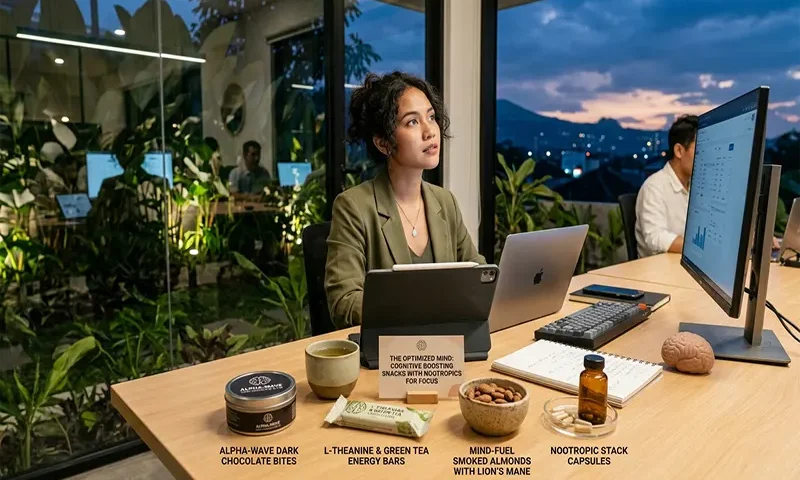
In the hyper-accelerated professional landscape of 2026, the “3 PM slump” is no longer just a productivity hurdle—it’s a biological indicator of cognitive fatigue. As we demand more from our neural networks, the concept of “brain fog” has become an epidemic, driven by high-stress environments and nutrient-void snacking habits.
Enter the era of Nootropics. Once a niche interest for biohackers, these “smart compounds” are now mainstream tools for enhancing neuroplasticity, memory, and mental clarity. However, the most effective way to utilize nootropics isn’t always through a pill; it is through strategic, bioavailable nutrition.
The Science of Brain Fuel: Precursors and Pathways
The human brain is an energy glutton, consuming roughly 20% of the body’s total caloric intake despite making up only 2% of its mass. To maintain peak performance, the brain requires more than just glucose; it requires specific precursors to synthesize neurotransmitters.
When you snack for focus, you are essentially providing the raw materials for:
- Acetylcholine: The primary neurotransmitter for learning and memory.
- Dopamine: The driver of motivation and executive function.
- BDNF (Brain-Derived Neurotrophic Factor): Often called “Miracle-Gro for the brain,” this protein supports the survival of existing neurons and encourages the growth of new ones.
The “Big Three” Nootropic Categories in Food
Before diving into specific snacks, it is vital to understand the three functional categories of nootropics that can be found in a well-stocked pantry:
1. The Stimulant Stack (Caffeine + L-Theanine)
Caffeine is a world-renowned stimulant, but its “jittery” side effects can ruin precision work. When paired with L-Theanine (found in green tea), it creates a synergistic “calm focus.” L-Theanine increases alpha brain waves—associated with relaxed alertness—smoothing out the caffeine spike.
2. Memory Enhancers (Cholinergics and Omegas)
These compounds act as the building blocks of neural architecture. Omega-3 fatty acids (specifically DHA) are essential for maintaining cell membrane fluidity, while choline-rich foods provide the backbone for acetylcholine.
3. Stress Adaptogens (Functional Mushrooms)
In 2026, Lion’s Mane and Reishi have moved from the fringe to the forefront. These mushrooms act as adaptogens, helping the brain maintain homeostasis under stress and stimulating Nerve Growth Factor (NGF) for long-term brain health.
Top 7 Nootropic-Rich Snacks for Mental Clarity
1. Dark Chocolate (70%+ Cacao)
Dark chocolate is a potent source of flavanols and theobromine. These compounds cross the blood-brain barrier to increase cerebral blood flow, acutely improving spatial memory and reaction time.
- Cognitive Benefit: Rapid increase in processing speed.
2. Spiced Walnuts (Omega-3s & ALA)
Walnuts even look like brains, which is a fitting coincidence. They are significantly higher in alpha-linolenic acid (ALA) than other nuts, which helps lower oxidative stress in the brain.
- Cognitive Benefit: Supports long-term memory and neuroprotection.
3. Wild Blueberries (Anthocyanins)
The deep blue pigment in these berries comes from anthocyanins, which have been shown to facilitate “cross-talk” between neurons. Recent 2025 studies suggest they can actually reverse some markers of cognitive aging by promoting neurogenesis.
- Cognitive Benefit: Enhanced verbal recall and task switching.
4. Pumpkin Seeds (The Mineral Trifecta)
A handful of pumpkin seeds provides an incredible dose of Zinc, Magnesium, and Copper. Zinc is crucial for nerve signaling, while Magnesium is essential for learning and memory.
- Cognitive Benefit: Reduced mental fatigue and improved mood regulation.
5. Lion’s Mane “Latte” or Energy Balls
Lion’s Mane is the only mushroom known to contain hericenones and erinacines, which can pass the blood-brain barrier to stimulate NGF.
- Cognitive Benefit: Improved focus and potential repair of neural pathways.
6. Hard-Boiled Eggs (Choline)
The yolk of an egg is one of the densest natural sources of Choline. Without adequate choline, your brain literally cannot communicate efficiently between cells.
- Cognitive Benefit: Superior clarity and “anti-fog” protection.
7. Ceremonial Matcha (L-Theanine)
Matcha provides a concentrated dose of L-Theanine. Unlike a standard cup of coffee, the “Matcha Focus” is characterized by a lack of an afternoon crash.
- Cognitive Benefit: Sustained attention for deep-work sessions.
The Science Corner: The Gut-Brain Axis
Research in 2026 has solidified the link between gut health and mental performance. About 90% of your body’s serotonin is produced in the gut. Snacks that include prebiotic fibers (like green bananas or chicory root) or fermented items (like kefir) support a microbiome that sends “calm” signals to the brain via the vagus nerve, reducing anxiety-induced brain fog.
Nootropic Snack Recipes for the Office
1. The “Flow State” Matcha Energy Balls
- Ingredients: 1 cup oats, 1/2 cup almond butter, 2 tsp ceremonial matcha powder, 1 tsp Lion’s Mane powder, 1 tbsp honey.
- Method: Mix all ingredients, roll into bite-sized balls, and refrigerate.
- Why it works: Combines the steady glucose of oats with the L-Theanine of matcha and NGF-boosting Lion’s Mane.
2. Turmeric-Spiced Brain Mix
- Ingredients: Raw walnuts, pumpkin seeds, a pinch of black pepper, and 1 tsp turmeric.
- Method: Lightly toast the nuts and seeds, then toss in the spices.
- Why it works: Turmeric (Curcumin) is a powerful anti-inflammatory, but it requires the piperine in black pepper to be absorbed by the body. This mix protects the brain from “inflammaging.”
Investing in Your Cognitive Capital
Maintaining focus in a world of infinite distractions is a physical discipline as much as a mental one. By shifting your snacking habits toward nootropic-rich, whole foods, you are not just avoiding a sugar crash—you are actively investing in your cognitive capital.
The cumulative effect of these nutrients—the Omega-3s repairing your membranes, the choline fueling your signals, and the adaptogens protecting your peace—creates a brain that is resilient, sharp, and ready for the demands of the modern era. Remember: the best “biohack” is often found in the most nutrient-dense ingredients in your kitchen.

