
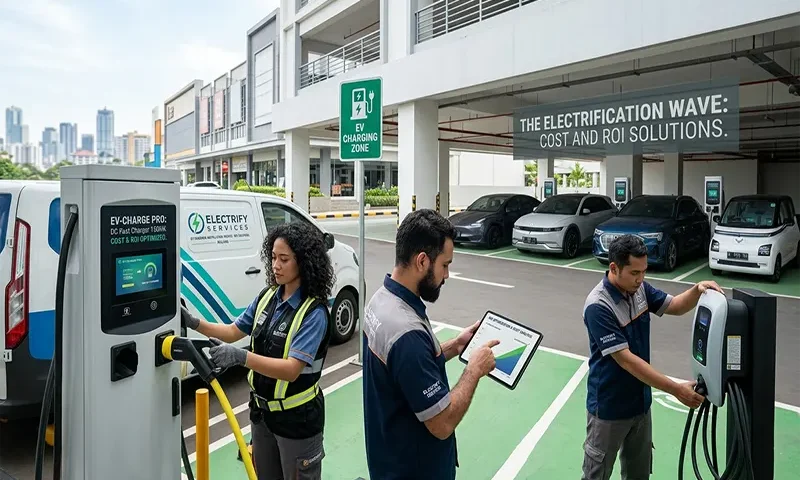
The transition to electric mobility is no longer a “green niche”; it is a massive industrial pivot. As of 2026, the gap between Electric Vehicle (EV) sales and available charging infrastructure remains the single greatest bottleneck in the automotive market. For electrical contractors and entrepreneurs, this gap represents a generational opportunity.
Starting an EV charging station installation service is a dual-threat business model, operating in both the high-volume residential sector and the high-margin commercial sector. However, the path to profitability requires a deep understanding of hardware costs, specialized labor, and the complex web of government incentives.
1. The Startup Costs: Initial Investment Breakdown
Entering the EVSE (Electric Vehicle Supply Equipment) market requires more than just a standard electrical license. To be competitive and insurable, your startup costs generally fall into three categories:
Licensing, Certification, and Training
Standard Master Electrician credentials are the baseline, but specialized EVSE certification (such as the EVITP in North America) is becoming a prerequisite for government-funded projects.
- Estimated Cost: $2,000 – $5,000 for specialized training and certification for a small team.
Equipment and Inventory
You don’t just need a van; you need specialized load-testing equipment to ensure a home’s electrical panel can handle a continuous 40–50 amp draw without overheating.
- Level 2 Units (Stock): Keeping 5–10 units in stock allows for “same-week” installation, a major competitive advantage.
- Testing Tools: EV simulators and circuit analyzers.
- Total Estimated Cost: $15,000 – $40,000 (depending on inventory levels).
Marketing and Partnerships
Your Customer Acquisition Cost (CAC) will be highest in the first six months. The most successful startups invest heavily in partnerships with local EV dealerships. When a customer buys a car, your brochure should be in the glovebox.
- Estimated Cost: $5,000 – $10,000 for initial branding and dealership referral programs.
2. Operational Revenue Streams
Profitability in this business is not a “one-size-fits-all” calculation. Revenue is typically split between three distinct project types:
Residential Installations (The “Bread and Butter”)
These are high-volume, low-complexity jobs. A standard Level 2 home install usually involves running a 240V line from the panel to the garage. While the individual profit is lower, the sales cycle is fast (often 24–48 hours).
Commercial and Multi-Family (The “Scale”)
Apartment complexes and office parks are under immense pressure to provide charging. These projects involve multiple “ports,” complex load management software, and often trenching through asphalt. These are six-figure contracts with significant hardware margins.
Maintenance and “CaaS” Contracts
The most overlooked revenue stream is Charging as a Service (CaaS). Public and commercial chargers break down frequently. Offering a monthly “Uptime Guarantee” contract to a shopping mall ensures recurring revenue that stabilizes the fluctuating nature of construction work.
3. Financial Breakdown: Installation Economics
| Metric | Residential (Level 2) | Commercial (Level 3/DC Fast) |
| Hardware Cost | $400 – $800 | $20,000 – $60,000 |
| Labor & Permitting | $800 – $1,500 | $15,000 – $50,000 |
| Average Total Invoice | $1,500 – $3,000 | $40,000 – $150,000+ |
| Gross Profit Margin | 25% – 35% | 15% – 25% |
| Project Lead Time | 1–5 days | 3–12 months |
4. The ROI Calculation: When Do You Break Even?
For a lean operation starting with one truck and two electricians, the Payback Period is typically between 8 to 14 months.
The ROI Accelerator: Government Incentives
In 2026, the Inflation Reduction Act and local utility rebates continue to play a massive role. In many jurisdictions, commercial property owners can write off up to 30% of the installation cost. As an installer, your ability to “sell the rebate” is your most powerful sales tool. By handling the paperwork for the client, you increase your closing rate by over 50%, directly impacting your ROI by shortening the sales cycle.
Pro-Tip: Utility-Side Navigation
The biggest “ROI killer” is the utility approval process. Commercial projects often require a new transformer or a service upgrade from the power company. These “utility-side” delays can stretch projects by months. To maintain cash flow, always require a 50% upfront deposit on commercial hardware to cover your out-of-pocket costs during the wait.
5. Market Challenges and Future-Proofing
The industry is not without its hurdles. The primary challenge in 2026 is Switchgear Availability. Global supply chains for heavy electrical components are still lagging behind demand. Successful installation services are overcoming this by pre-ordering “common denominator” components (breakers, conduits, wire) six months in advance.
Future-Proofing Your Business
To stay relevant beyond 2030, your service must evolve into Energy Management. This includes:
- Solar Integration: Installing EV chargers that prioritize excess solar energy from the roof.
- Bidirectional Charging (V2H/V2G): Setting up systems where the car can power the house during a blackout. This requires specialized “Inverter-Chargers” and represents a significantly higher ticket price than a standard plug.
6. The 5-Year Outlook
The outlook for EV charging installation services is exceptionally bullish. As internal combustion engine (ICE) bans begin to take effect in various cities and states, the demand for “home fuel stations” will move from a luxury to a necessity.
An installation service started today isn’t just a construction business—it’s an entry point into the future of the smart home. While the “hard costs” of labor and equipment are significant, the high demand and potential for long-term maintenance contracts make this one of the most viable “green-tech” businesses for the next decade. Success will belong to the installers who can move as fast as the technology, providing not just a plug, but a complete energy ecosystem.

