
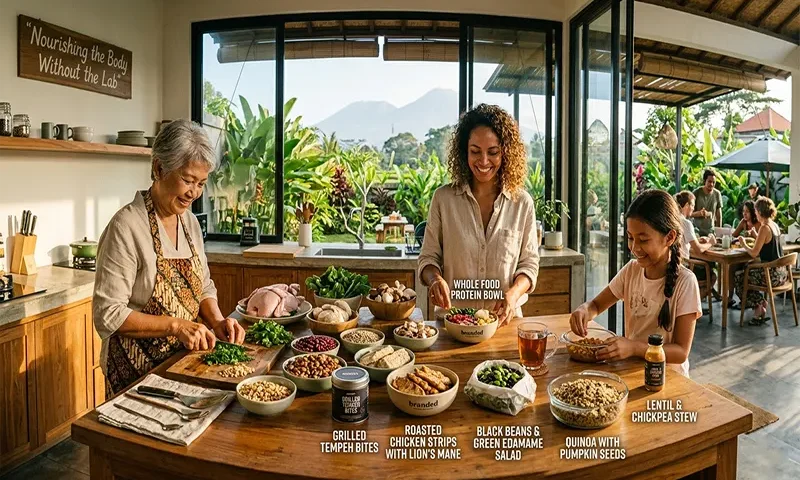
For decades, the transition to plant-based eating was often synonymous with “meat substitutes”—highly engineered patties and links designed to mimic the texture of beef or pork. However, by 2026, the health-conscious consumer has shifted their focus. The era of the Ultra-Processed Plant Food (UPPF) is being challenged by the Whole Food Plant-Based (WFPB) movement, which prioritizes protein in its most bioavailable, additive-free form.
While mock meats can serve as “transition tools,” they often come with a cocktail of methylcellulose, isolated soy proteins, and refined seed oils. To achieve true metabolic health and longevity, the goal is to source protein from ingredients that have been harvested, not manufactured.
1. The Anatomy of a Whole Food Protein
The primary difference between a whole food and an isolate is the “package.” In a whole food, protein arrives alongside fiber, phytonutrients, and minerals. This synergy—often called the food matrix—slows digestion, prevents insulin spikes, and supports a healthy gut microbiome.
Why Avoid Ultra-Processed Additives?
Ultra-processed protein sources often rely on:
- Texturizers: Gums (xanthan, guar) and thickeners that can cause gastrointestinal distress.
- Refined Oils: Industrial seed oils high in Omega-6, which may contribute to systemic inflammation.
- Isolated Proteins: High heat and chemical solvents (like hexane) are often used to strip soy or peas of their fats and fibers, leaving behind a denatured protein powder.
2. The “Non-Negotiable” Whole Food Sources
To hit a target of 1.2g to 1.6g of protein per kilogram of body weight using only whole foods, you must prioritize these “Protein Powerhouses”:
The Legume Leaders: Lentils and Beans
Legumes are the cornerstone of WFPB nutrition. A single cup of cooked lentils provides roughly 18g of protein and 15g of fiber.
- The Benefit: They are rich in lysine, an essential amino acid often lacking in grain-based diets.
- No-Additive Tip: Opt for dry beans or canned varieties labeled “no added salt” and “BPA-free liners.”
The Soy Standard: Tempeh and Edamame
While “soy protein isolate” is ultra-processed, tempeh is a whole-food superstar. Because it is fermented, the anti-nutrients (like phytic acid) are reduced, making the protein and minerals more absorbable.
- The Benefit: Tempeh offers 31g of protein per cup, making it more protein-dense than many animal sources.
- No-Additive Tip: Buy plain organic tempeh rather than pre-marinated “bacon-style” strips.
The Ancient Grains: Seitan and Spelt
While seitan is made from wheat gluten, it is often considered a “minimally processed” whole food if made at home using whole wheat flour (the “wash” method). Spelt and Teff are ancient grains that provide significantly higher protein than modern wheat or rice.
- The Benefit: One cup of cooked spelt provides 11g of protein.
3. The “Booster” Tech Stack: Small Additions, Big Impact
Strategic “top-ups” can help you reach high protein goals without adding excessive caloric volume:
- Nutritional Yeast: A “complete” protein source providing 8g per two tablespoons.
- Hemp Seeds: High in Omega-3s and providing 10g of protein per three tablespoons.
- Pumpkin Seeds: One of the densest mineral sources, providing 9g of protein per ounce.
4. Comparison: Whole Foods vs. Ultra-Processed Analogs
| Feature | Whole Food (e.g., Tempeh/Lentils) | UPPF (e.g., Mock Burger) |
| Protein Form | Natural Food Matrix | Isolated/Concentrated |
| Fiber Content | High (8g–15g per serving) | Low to Moderate (usually added) |
| Additives | None | Emulsifiers, Flavors, Gums |
| Sodium | Naturally Low | High (often 400mg+ per serving) |
| Digestive Impact | Prebiotic (supports gut) | Potential irritant (due to gums) |
5. A 3-Day “No-Process” Protein Plan
This plan focuses on high-density whole foods to ensure you hit 100g+ of protein daily without a single lab-grown ingredient.
Day 1
- Breakfast: Savory Chickpea Flour “Omelet” with spinach and nutritional yeast (22g protein).
- Lunch: Lentil and Walnut “Power Bowl” with tahini dressing (28g protein).
- Dinner: Marinated Tempeh Steaks with quinoa and steamed broccoli (35g protein).
Day 2
- Breakfast: Overnight Spelt Flakes with hemp seeds and soy milk (organic, beans-and-water only) (20g protein).
- Lunch: Black Bean and Edamame Salad with pumpkin seed garnish (25g protein).
- Dinner: Seitan Stir-fry with bok choy and ginger-garlic sauce (40g protein).
Day 3
- Breakfast: Tofu Scramble (Organic Extra Firm) with nutritional yeast and sprouted grain toast (30g protein).
- Lunch: Red Lentil Pasta (100% lentil flour) with marinara and hemp “parmesan” (28g protein).
- Dinner: Split Pea Soup with a side of steamed kale and sunflower seeds (25g protein).
Pro-Tip: Navigating the “Natural Flavors” Trap
Many “whole food” brands still sneak in “natural flavors” or “yeast extract” to enhance palatability. In 2026, the gold standard for WFPB is the “Five Ingredient Rule”: if the package contains more than five ingredients, or if you can’t find those ingredients in a standard garden, it’s likely leaning into the ultra-processed category.
6. The Future of Protein: Vertical and Bio-Identical
As we look toward the end of the decade, the line between “whole” and “tech” is blurring with the rise of Mycoprotein (fungal-based protein). While often sold as a processed nugget, the raw, fermented mycelium itself is a whole-food powerhouse. For those seeking the highest protein-to-calorie ratio without chemicals, home-grown or minimally processed fungi are becoming a vital part of the WFPB toolkit.
7. Choosing Adequacy over Hype
The obsession with “protein” often leads people into the arms of the supplement industry. However, by focusing on lentils, tempeh, seeds, and ancient grains, you are not just checking a macronutrient box; you are providing your body with the fiber and phytonutrients it needs to actually use that protein efficiently.
The most “future-proof” diet is the one that looks the most like the past: whole plants, minimally altered, consumed in their natural complexity. You don’t need a lab to build muscle; you need a well-stocked pantry of Earth’s most dense botanical offerings.

